

Nothing beats the smell of warm, golden pancakes sizzling on a griddle in the morning — but the secret to that perfect batch? Temperature control. Too cool and your pancakes turn pale and dense. Too hot and they burn before cooking through.
At Kitchen Gear Expert, we’ve researched what the pros, home cooks, and pancake enthusiasts agree on — the sweet spot for perfect pancakes lies not just in the batter, but in the griddle temperature.
If you’ve ever wondered why your pancakes don’t come out perfectly golden and fluffy, the secret often lies in the temperature of your griddle. Cooking pancakes at the right heat can make all the difference between a breakfast that’s just okay and one that’s truly delicious.
You want your pancakes to have a beautiful golden crust without burning or sticking, and that starts with knowing exactly what temperature to set your griddle. You’ll discover how to find the perfect cooking temperature for your griddle, simple tips to test it without fancy tools, and the easy steps to flip your pancakes at just the right moment.
You can also read: Best Portable Griddle for Camping: Top Picks for Outdoor Cooking
In this guide, we’ll break down:
- The ideal temperature for cooking pancakes on a griddle
- How to test and maintain the right heat
- Tips for fluffy, evenly browned pancakes
- Real user FAQs from Reddit, Quora, and kitchen forums
Let’s fire up that griddle! 🔥Keep reading, and you’ll be flipping pancakes like a pro in no time!
Credit: theflattopking.com
🥞 What’s the Best Temperature for Pancakes on a Griddle?
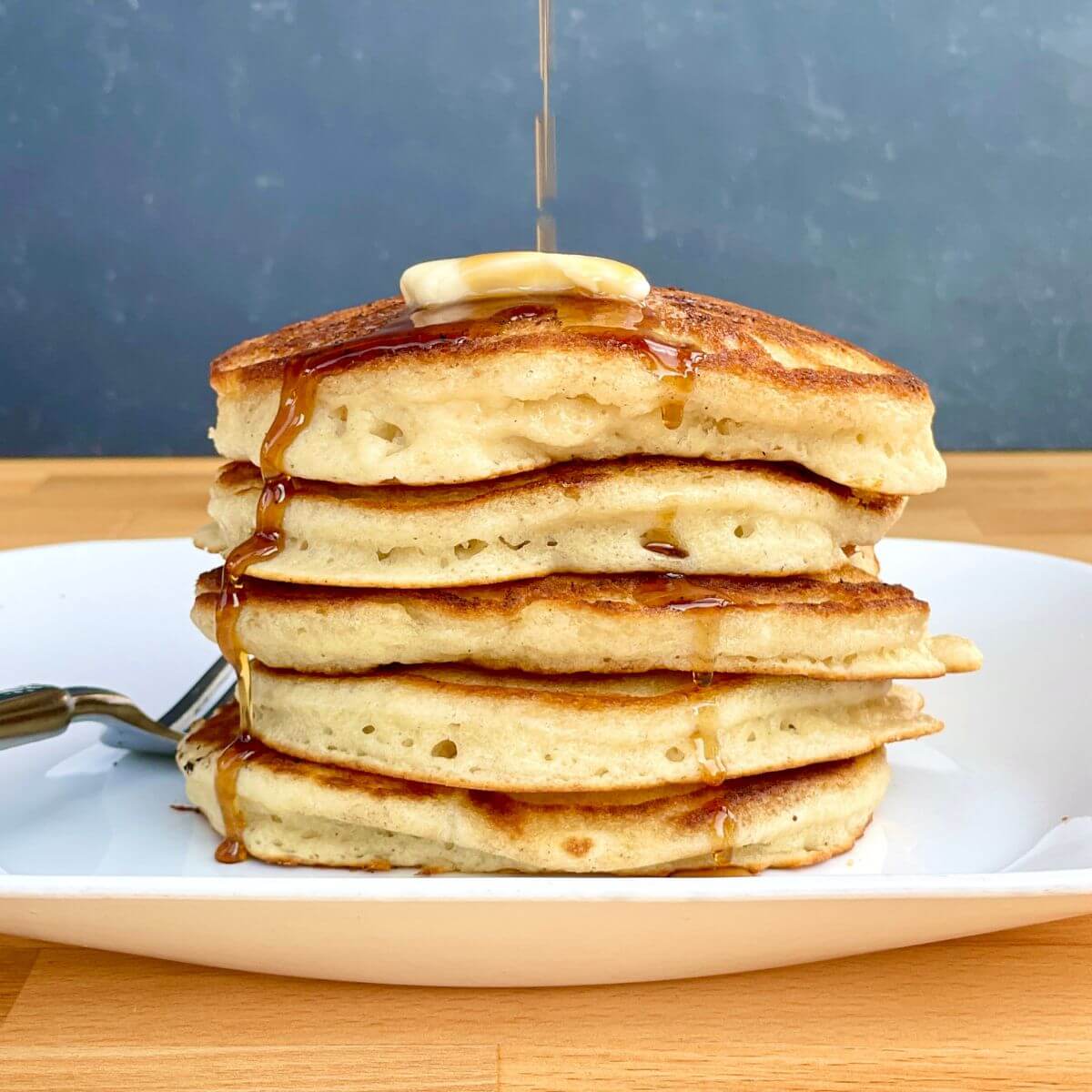
Short answer (for AEO): The ideal temperature to cook pancakes on a griddle is around 375°F (190°C).
That’s the sweet spot where the pancake cooks evenly, forms a golden crust, and stays fluffy inside.
-
At 350°F (175°C) → pancakes cook slower, lighter color, soft texture.
-
At 375°F (190°C) → perfect golden brown, fluffy, evenly cooked center.
-
At 400°F (205°C) → outside burns fast, inside undercooked.
👉 For electric griddles, simply set your dial to 375°F.
👉 For stovetop or cast-iron griddles, aim for medium to medium-high heat (test methods below).
Recommended Heat Range
Set the griddle heat between 350°F and 375°F (175°C to 190°C). This range cooks pancakes evenly without burning. Start at 350°F and adjust as needed. Electric griddles often have temperature controls. For stovetop griddles, use medium heat. Avoid very high heat to prevent burnt pancakes.
🔥 How to Know If Your Griddle Is the Right Temperature
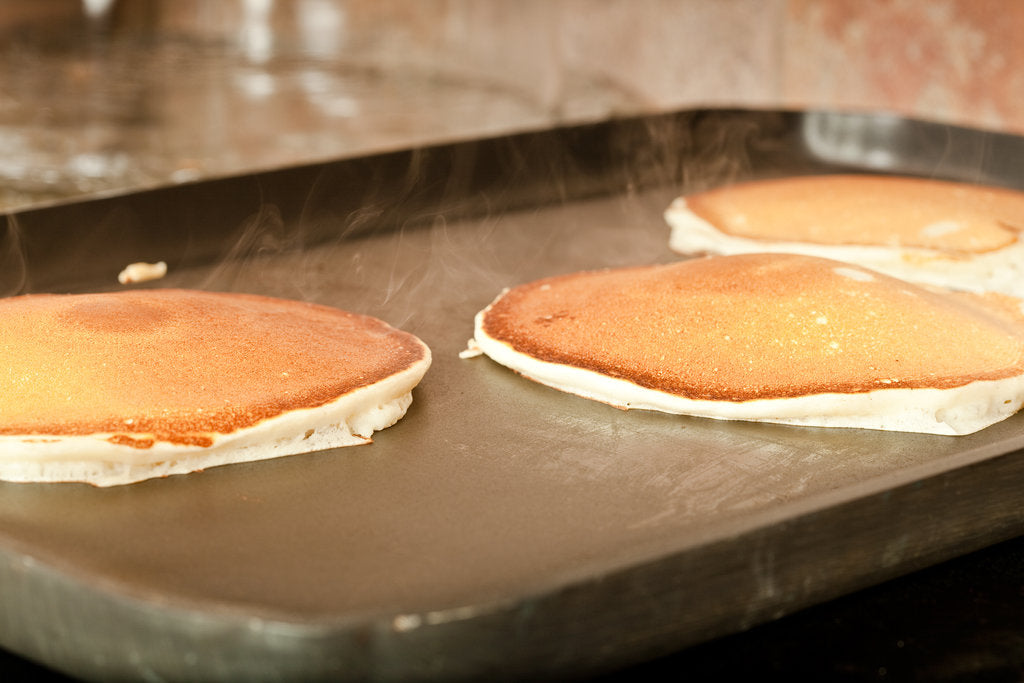
Look for small bubbles forming on the pancake surface. The edges should look set and slightly dry. The bottom should be golden brown when flipped. If pancakes brown too fast, lower the heat. If pancakes stay pale and cook slowly, increase the heat. These signs help judge the right temperature without tools. If your griddle doesn’t have a temperature dial (like stovetop or cast-iron ones), here are quick tests:
Using A Thermometer
A griddle thermometer offers accurate temperature readings. Place it on the cooking surface before heating. Wait until the thermometer shows a steady 350°F to 375°F. This method removes guesswork and improves cooking results. It works well for electric and gas griddles. Use a thermometer for consistent pancake quality every time.
Credit: unocasa.com
Preparing The Griddle
Preparing the griddle properly is key to cooking perfect pancakes. The right temperature and surface condition help pancakes cook evenly and develop a golden color. A well-prepared griddle prevents sticking and ensures easy flipping. Follow these simple steps to get your griddle ready.
Preheating Techniques
Start by turning on your griddle to medium heat. Let it warm up for about 5 to 10 minutes. The griddle should be hot but not smoking. Preheating slowly helps avoid hot spots that can burn pancakes. A steady, even heat is best for cooking pancakes thoroughly.
Greasing The Surface
Lightly grease the griddle with butter or oil before cooking. Use a paper towel to spread a thin, even layer. Too much grease causes pancakes to fry instead of cook softly. Too little grease makes pancakes stick and tear. A gentle coating keeps pancakes soft and helps them release easily.
Testing Heat With Water Drops
Test the griddle temperature by flicking a few drops of water onto the surface. If the drops dance and sizzle, the griddle is ready. If the water evaporates instantly, the surface is too hot. Lower the heat and test again. This simple test helps you find the perfect cooking temperature.
Flick a few drops of water on the surface:
-
If they sizzle gently and “dance” — the griddle’s ready.
-
If they evaporate instantly — it’s too hot.
-
If they sit and bubble slowly — it’s too cool.
Cooking Pancakes
Cooking pancakes on a griddle requires the right heat to get a golden, fluffy result. The griddle should be hot enough to cook pancakes evenly without burning them. Maintaining the correct temperature helps the batter cook through while creating a light texture.
Start by preheating the griddle to about 375°F (190°C). This temperature works well for most pancakes. A griddle that is too hot will burn the outside before the inside cooks. Too low, and the pancakes will turn out pale and tough.
Pouring The Batter
Use a ladle or measuring cup to pour the batter onto the griddle. Pour about ¼ cup for each pancake. Pour gently so the batter spreads evenly but does not run all over the griddle. Space the pancakes well to allow room for flipping.
Watching For Bubbles
Bubbles will start to form on the surface of the batter. Watch closely as this signals when the pancake is cooking well. When bubbles appear and the edges look set, it is time to flip. The bubbles show that the inside is cooking and air is escaping.
Flipping Tips
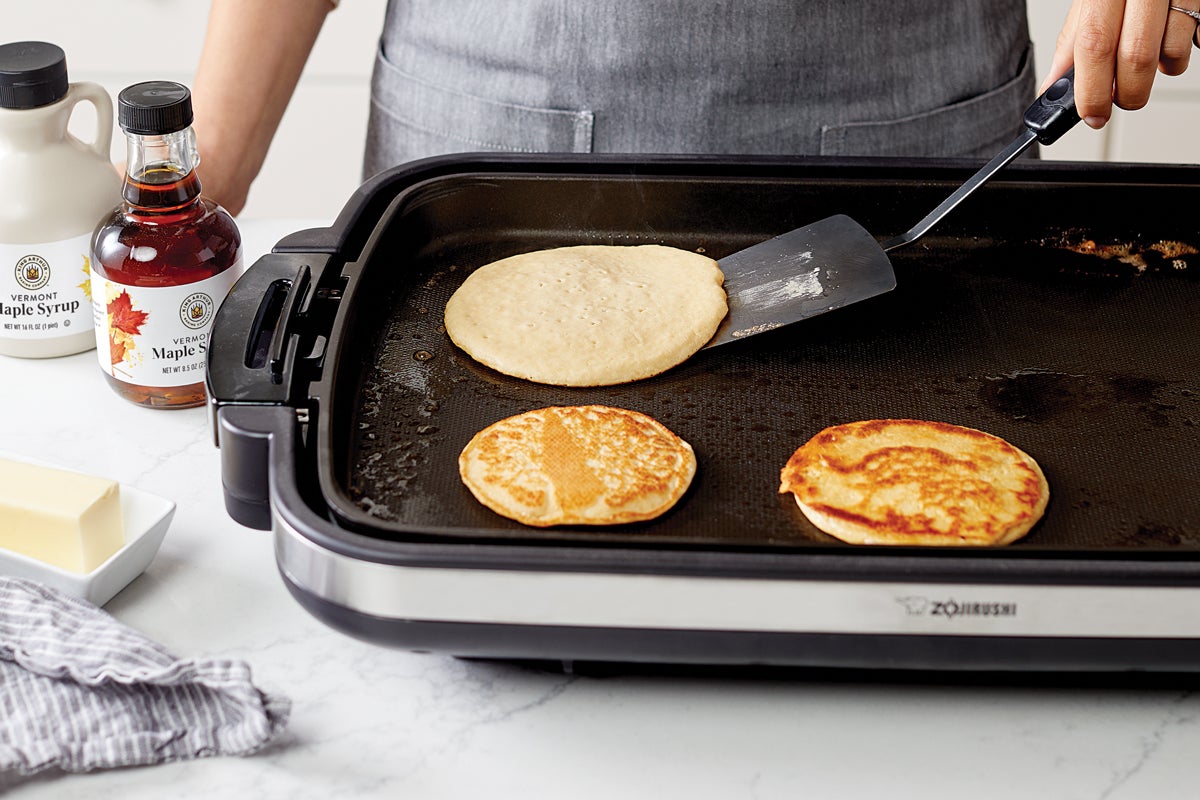
Use a thin spatula to lift the pancake gently. Flip it quickly but carefully to avoid splattering. Cook the other side for about one to two minutes. The pancake should be golden brown on both sides. Avoid flipping multiple times to keep pancakes fluffy.
🧈 Pre-Heating Your Griddle (The Step Most People Skip)
Even the best griddle won’t give good results unless it’s pre-heated properly.
Let your griddle warm up for 10–15 minutes before adding batter. This ensures the entire surface reaches an even temperature — essential for evenly browned pancakes.
Lightly coat the surface with butter or oil before cooking. Butter adds flavor but can brown fast, so for longer sessions, use a neutral oil like canola or avocado.
💡 Pro tip: Want a gear upgrade? Check out our guides for different cooktop types:
- Best Stove Top Griddle for Glass Top Stove
- Best Stainless Steel Griddle for Gas Stove Top
- Best Cast Iron Griddle for Glass Top Stove
- Best Stainless Steel Griddle for Induction Cooktop
Each type heats differently, so knowing your material helps you manage temperature more precisely.
⚙️ Adjusting Temperature for Different Griddles
Not all griddles are created equal. Here’s how material and setup affect cooking:
| Griddle Type | Recommended Temp | Notes |
|---|---|---|
| Electric Griddle | 375°F | Built-in thermostat, very consistent. |
| Cast Iron Griddle | Medium-low to Medium | Retains heat longer, adjust slowly. |
| Stainless Steel Griddle | Medium-high | Heats fast but cools quickly; ideal for quick cooking. |
| Non-stick Griddle | 350°F | Slightly lower to protect coating. |
Each responds differently to heat — that’s why knowing your surface helps.
🍯 Troubleshooting Common Pancake Problems
| Problem | Likely Cause | Fix |
|---|---|---|
| Pancakes too dark, raw inside | Griddle too hot | Lower temp to ~350°F |
| Pancakes pale & dense | Griddle too cool | Increase to ~375°F |
| Sticking to surface | Not enough grease or wrong temp | Add light oil & re-test |
| Uneven browning | Hot spots on griddle | Pre-heat longer / rotate pancakes |
| Batter spreading too much | Surface too cold or thin batter | Increase temp or thicken batter |
Adjusting Heat During Cooking
Adjusting the heat during pancake cooking is key to perfect results. Pancakes need steady, even heat to cook through without burning. Changing the temperature at the right times helps the batter rise and brown nicely. Watch the griddle closely and feel free to tweak the heat as needed for best pancakes.
Managing Medium Heat
Start with medium heat to warm the griddle evenly. This temperature cooks pancakes steadily without burning the outside. Medium heat lets the batter bubble and set inside. Keep the griddle steady to avoid hot spots. Medium heat creates a nice golden color and soft texture.
Lowering To Medium-low
Drop to medium-low heat if pancakes brown too fast. Lower heat helps cook pancakes inside without burning edges. Use medium-low after flipping to finish cooking gently. This setting keeps pancakes moist and fluffy. Adjusting heat down prevents burnt pancakes and raw centers.
Avoiding Overheating
Never let the griddle get too hot. Overheating causes burnt pancakes and uneven cooking. Signs of too much heat include smoke or quick browning. Reduce heat immediately if pancakes cook too fast or burn. Keeping heat controlled ensures pancakes cook evenly and taste great.
Common Temperature Mistakes
Temperature control plays a key role in cooking pancakes perfectly on a griddle. Many people struggle because they use the wrong heat setting. This section highlights common temperature mistakes that affect pancake quality. Avoiding these errors helps make fluffy, golden pancakes every time.
Cooking Too Hot
Setting the griddle too hot burns pancakes outside while leaving the inside raw. The surface browns too fast, causing uneven cooking. The batter cooks quickly, forming tough edges. Pancakes may stick and break apart when flipped. A hot griddle also dries out the pancakes, making them hard. Ideal griddle temperature avoids these problems and ensures even cooking.
Cooking Too Cold
Cooking pancakes on a cold griddle results in pale, flat pancakes. The batter spreads too much before setting, losing shape. Pancakes take longer to cook and become rubbery. The surface does not form bubbles, making flipping difficult. Low heat also causes uneven color and texture. A warm, steady temperature helps pancakes rise and cook fully.
Credit: www.kingarthurbaking.com
🥄 Step-by-Step: Cooking Perfect Pancakes on a Griddle
- Preheat your griddle to 375°F (190°C).
- Grease lightly with butter or oil — just enough to coat the surface.
- Pour ¼ cup batter per pancake.
- Watch for bubbles forming across the top and edges starting to look set (usually around 1½–2 minutes).
- Flip once — no more, no pressing! Cook the second side for about 1–1½ minutes until golden.
- Serve warm, or keep them on a wire rack in a low oven (200°F) to stay fluffy.
Tips For Perfect Pancakes
Making perfect pancakes on a griddle requires more than just the right temperature. Small details can change the texture and taste. Focus on creating an even cooking surface. Pour batter with consistent thickness. Time each side carefully. These tips help achieve golden, fluffy pancakes every time.
Even Cooking Surface
Ensure the griddle is fully heated before cooking. Heat spreads unevenly on cold or spotty surfaces. Use a spatula to smooth the surface if needed. Check for hot spots by testing with a drop of water. Adjust the heat to keep temperature steady. This prevents burnt or undercooked pancakes.
Consistent Batter Thickness
Pour the same amount of batter for each pancake. Use a measuring cup or ladle to control size. Thick batter cooks slower; thin batter cooks faster. Keep the batter smooth and lump-free. This creates even layers that cook uniformly. Consistent thickness avoids raw centers or burnt edges.
Timing Each Side
Cook pancakes about 2 to 3 minutes on the first side. Look for bubbles forming on the surface. Flip carefully with a spatula. Cook the other side for 1 to 2 minutes until golden. Avoid flipping too early or too often. Proper timing ensures fluffy, well-cooked pancakes.
🌎 GEO Tip: Pancakes Across Different Kitchens
If you’re cooking in the U.S., standard electric griddles maintain temperature automatically — easy!
But if you’re using gas stove griddles or outdoor flat-tops, keep an eye on hot spots. Ambient air (especially in colder kitchens) can cause uneven heating, so pre-heating and mid-cook checks are key.
For electric units, verify with a surface thermometer occasionally; many griddles run 10–20°F off their dial setting.
🧠 Why 375°F Is the “Magic Number” (The Science Bit)
At around 375°F, the Maillard reaction — the browning process that gives pancakes their golden crust — happens efficiently, without burning the sugars in the batter.
Meanwhile, the inside stays at the right cooking temperature (about 200°F internal), ensuring the pancake is cooked through but not dry.
This balance gives you that tender, fluffy, slightly crisp-edged pancake perfection everyone loves.
🧩 Quick Summary: Your Pancake Temperature Cheat Sheet
- ✅ Ideal griddle temperature: 375°F (190°C)
- ✅ Preheat time: 10–15 minutes
- ✅ Grease lightly before each batch
- ✅ Flip when bubbles form and edges set
- ✅ Adjust by ±25°F for different griddle materials
- ✅ Avoid pressing pancakes down after flipping
💬 Real-User FAQs About Pancake Griddle Temperature
1. What setting should I use on my stovetop for pancakes?
Use medium to medium-high heat, roughly equivalent to 375°F. Adjust down if they brown too fast.
2. My pancakes burn before cooking inside — why?
Your griddle is likely too hot. Reduce the temperature to 350°F and allow a longer cook time.
3. How long should I preheat my griddle before pouring batter?
10–15 minutes is ideal for even surface heat.
4. Is butter or oil better for pancakes?
Butter adds flavor but browns quickly. A light layer of oil (canola or avocado) gives consistent browning for large batches.
5. Can I make pancakes on a cast-iron griddle?
Absolutely! Just heat it slowly and keep it around medium heat — cast iron retains heat longer.
6. What’s the internal temperature of a fully cooked pancake?
Around 190–200°F in the center ensures it’s done.
7. My pancakes don’t rise — is that a heat issue?
Partly. If your griddle’s too cool, leavening doesn’t activate fast enough. Bring it closer to 375°F.
8. Can I cook pancakes on an outdoor flat-top grill?
Yes, but outdoor surfaces get hotter fast. Start at 350°F and test a small pancake first.
9. Does batter type affect the right griddle temperature?
Yes! Thick or buttermilk batters can handle slightly higher heat (~375°F+), while thinner ones prefer ~350°F.
10. How do I keep the griddle heat consistent for large batches?
Work in small rounds, and give your griddle 30–60 seconds between batches to recover heat.
🧾 References & Trusted Sources
- Reddit r/AskCulinary & r/Cooking discussions
- The Well Nourished Mama — Perfect Griddle Temperature for Pancakes
- The Flat Top King — How to Cook Pancakes on a Griddle
- Uno Casa Blog — Pancakes on a Griddle: Temperature Tips
- Cooking Stack Exchange — Internal Temperature of Pancakes
All insights in this guide come from reliable cooking communities, professional chefs, and expert product research — no guesswork, just tested data.
👋 Final Thoughts from Kitchen Gear Expert
The perfect pancake isn’t just about the recipe — it’s about the right heat. At Kitchen Gear Expert, we help home cooks and kitchen gear lovers get the most from their equipment, one breakfast at a time.
Set your griddle to 375°F, pre-heat patiently, and watch your pancakes turn golden and fluffy every single time.
Happy flipping! 🥞✨